NBEMS screening examination
FMGE Exam 2026: Pattern, Eligibility & the 150 Pass Mark
By Dr. Utsav Bhattacherjee, MBBS, MBA · Last updated:
The FMGE is the screening test an Indian citizen holding a medical degree from outside India must clear before practising medicine in India. NBEMS conducts it. The paper is 300 multiple-choice questions worth one mark each, split into two parts of 150 questions, with two hours and thirty minutes allowed for each part. The pass mark is 150 out of 300, exactly 50%, and it is a fixed absolute cutoff rather than a percentile: there is no rank-based selection and no category relaxation, so General, OBC, SC, ST and OCI candidates all need the same 150 marks. There is no negative marking. A correct answer scores one mark, and a wrong answer scores exactly what an unattempted one scores, which is why leaving a question blank can only cost you. Before applying for a session you need an Eligibility Certificate from the National Medical Commission, which is a separate application to a separate body.
Source: National Board of Examinations in Medical Sciences (NBEMS). Figures on this page are drawn from their published material.
FMGE full form: Foreign Medical Graduate Examination
It is the licensing test that determines whether Indian doctors who studied abroad can practise medicine in India. This guide covers the complete picture — eligibility, pattern, subjects, dates, and what comes after.
Use our free score calculator to track your mock test performance →300
Total Questions
300
Total Marks
150
Pass Mark (50%)
0
Negative Marking
Attempt every question
3×
Per Year
Raised from 2× — NBEMS, Aug 2026
∞
Attempts Allowed
No attempt limit
Who can sit the FMGE
You need all four of these.
Indian citizenship or OCI status
Verified against your passport during the application.
A foreign primary medical qualification
MBBS or equivalent, from an institution recognised in that country and listed in the World Directory of Medical Schools, carrying Indian Embassy attestation.
A valid NMC Eligibility Certificate
Issued after your foreign degree is verified. Apply as early as you can — NMC does not publish a processing time.
Your final result declared before the cut-off
The date is set in each session’s NBEMS information bulletin and moves between sessions, so check the bulletin rather than assuming.
You do not need a completed internship. You can sit FMGE while your internship is in progress, or before starting it. Internship completion is required separately when you apply for registration after passing, not to appear for the exam.
Background
What is the FMGE and why does it exist?
The Foreign Medical Graduate Examination is a screening test conducted by the National Board of Examinations in Medical Sciences under the National Medical Commission. It exists because Indian doctors who complete their MBBS abroad train under different medical education systems, with different syllabi, clinical exposure and standards. Before practising in India they must show they meet the same knowledge standard as graduates of Indian medical colleges.
This is not a postgraduate entrance exam. It is a licensing exam — pass or fail, with no rank, no merit list and no percentile. The pass mark is 150 out of 300. Every correct answer scores one mark; wrong and unattempted answers score zero. The structure is simple, but the pass rate tells a different story: historically between 10 and 32 percent of candidates clear each session. The distance between the syllabus and the level most candidates arrive with is the problem FMGE preparation has to solve.
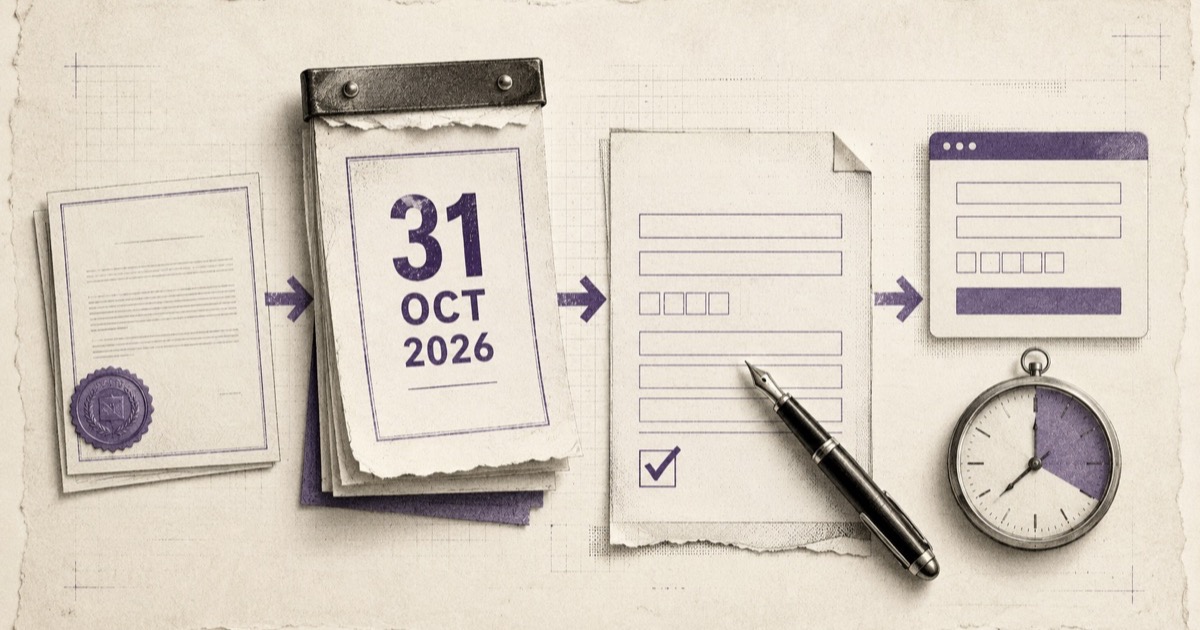
The exam runs three times a year and is computer-based, held at NBEMS-approved centres across India. It ran twice a year — June and December — until a notice dated 28 August 2026, in which NBEMS decided to conduct FMGE thrice every year instead of biannually, and scheduled an additional sitting for 31 October 2026. Passing grants eligibility to apply for provisional or permanent registration with the NMC or a State Medical Council — the formal prerequisite to practising medicine in India.
Who must take FMGE
FMGE is mandatory for Indian citizens and Overseas Citizens of India who obtained their primary medical qualification from a foreign country.
- Indian citizens with an MBBS from Russia, China, Ukraine, the Philippines, or any other foreign country
- Overseas Citizens of India (OCIs) holding a foreign MBBS degree
- Nepalese citizens holding an Indian government issued ID who studied medicine abroad, where special provisions apply — check the NBEMS bulletin
- Anyone holding a primary medical qualification obtained abroad that is equivalent to an Indian MBBS
Who is exempt from FMGE
Certain categories are exempt under NMC regulations and do not need to appear.
- Candidates holding a postgraduate medical qualification (MD or MS equivalent) from Australia, Canada, New Zealand, the United Kingdom or the United States, who are eligible to practise medicine in those countries
- Candidates admitted to a foreign medical institution before 15 March 2002 are exempt from the Eligibility Certificate requirement — check current NMC guidelines for the full position
FMGE is not required for an MBBS from an Indian medical college. It applies exclusively to foreign-trained graduates.
FMGE exam pattern
Understanding the structure is the first step to preparing for it properly.
- Total questions
- 300 MCQs
- Total marks
- 300 (1 mark per question)
- Pass mark
- 150 out of 300 (50%)
- Negative marking
- None
- Mode
- Computer-based test (CBT)
- Duration
- 5 hours total (2 hours 30 minutes per part)
Two-part structure
Part A
Pre & Para Clinical
100 questions
2 hours 30 minutes
- Anatomy
- Physiology
- Biochemistry
- Pathology
- Microbiology
- Pharmacology
- Forensic Medicine
Part B
Clinical Subjects
200 questions
2 hours 30 minutes
- General Medicine
- Psychiatry
- Dermatology & STD
- Radiotherapy
- General Surgery
- Anaesthesiology
- Orthopaedics
- Radiodiagnosis
- Paediatrics
- Ophthalmology
- ENT
- OBG
- Community Medicine
Since May 2024, each 150-question part is divided into three locked sections of 50 questions and 50 minutes each. Once a section’s timer expires it closes automatically and you cannot go back to it. Plan your time within each section — the 50-minute clock is not forgiving.
Subject-wise question distribution
The 300 questions are distributed across 20 subjects in two parts, following the NMC Graduate Medical Regulations.
| Subject | Questions | % of Part |
|---|---|---|
| Anatomy | 17 | 17% |
| Physiology | 17 | 17% |
| Biochemistry | 17 | 17% |
| Pathology | 13 | 13% |
| Microbiology | 13 | 13% |
| Pharmacology | 13 | 13% |
| Forensic Medicine | 10 | 10% |
| Total Part A | 100 | 100% |
| Subject | Questions | % of Part |
|---|---|---|
| General Medicine | 33 | 16.5% |
| General Surgery | 32 | 16% |
| OBG | 30 | 15% |
| Community Medicine | 30 | 15% |
| Paediatrics | 15 | 7.5% |
| Ophthalmology | 15 | 7.5% |
| ENT | 15 | 7.5% |
| Psychiatry | 5 | 2.5% |
| Dermatology & STD | 5 | 2.5% |
| Radiotherapy | 5 | 2.5% |
| Anaesthesiology | 5 | 2.5% |
| Orthopaedics | 5 | 2.5% |
| Radiodiagnosis | 5 | 2.5% |
| Total Part B | 200 | 100% |
General Medicine (33), General Surgery (32), OBG (30) and Community Medicine (30) together account for 125 of the 200 clinical questions — 62.5% of Part B. These four subjects are where most of your preparation time should go. The fastest way to see how that weighting plays out in a real paper is to work through the FMGE previous year questions session by session.
Use the FMGE score calculator to see how subject-wise accuracy adds up to a total score →FMGE exam schedule
FMGE is conducted three times a year. NBEMS raised it from twice in a notice dated 28 August 2026 and added a sitting on 31 October 2026. Dates for 2027 have not been notified yet.
- Application opens
- Around April
- Application closes
- Around May
- Admit card
- Around June
- Exam date
- Late June
- Result declaration
- Around July
- Status
- Additional sitting, confirmed
- Exam date
- 31 October 2026
- Information bulletin
- To be notified
- Application window
- To be notified
- Admit card
- To be notified
- Status
- Not yet notified
- What is confirmed
- Three sittings a year
- Exam dates
- Awaiting NBEMS
- Where they appear
- natboard.edu.in bulletin
Dates are announced by NBEMS on natboard.edu.in. Always verify against the official information bulletin before applying rather than relying on any third-party site, including this one. The application fee is non-refundable and is stated in each session’s bulletin.
How to apply for FMGE
Applications are made at natboard.edu.in once NBEMS publishes the bulletin for a sitting, and cannot be completed without an NMC Eligibility Certificate you have to apply for separately and well in advance.
FMGE registration: how to apply, dates and fees has the steps, the documents and the fee. The NMC Eligibility Certificate covers the prerequisite.
FMGE pass rates — the real picture
The pass rate tells you something important: clearing FMGE takes deliberate preparation. It is not a formality, and it has a meaningful fail rate.
| Session | Pass rate | Candidates appeared |
|---|---|---|
| Jun 2021 | 23.7% | 18048 |
| Dec 2021 | 24.3% | 23349 |
| Jun 2022 | 10.6% | 22092 |
| Dec 2022 | 32.2% | 30548 |
| Jun 2023 | 10.2% | 24250 |
| Dec 2023 | 20.6% | 37827 |
| Jun 2024 | 20.9% | 34608 |
| Dec 2024 | 29.6% | 44390 |
| Jun 2025 | 18.6% | 36034 |
| Dec 2025 | 23.4% | 42872 |
| Jun 2026 | 12.77% | 36300 |
~20.6%
Average pass rate
across recent sessions
Higher
December pass rates
consistently above June — more preparation time after final MBBS
29.6%
Dec 2024 pass rate
the highest in recent sessions
The variation — from 10% to 32% within a few years — is driven almost entirely by exam difficulty and question distribution, not by any change in the cutoff, which stays fixed at 150/300. Sessions with more image-based and integrated clinical questions typically show lower pass rates. Preparation that builds genuine understanding rather than rote recall is more resilient to that variation.
What happens after you pass FMGE?
Passing is not the licence. You apply for provisional registration with a State Medical Council, complete the 12-month CRMI, and then apply for permanent registration — that last entry in the register is what lets you practise independently.
Wondering whether NExT changes any of this? It does not, yet — the National Exit Test is deferred and FMGE remains the qualifying exam.
- Apply for NMC registration
- Complete your internship
- Start practising
- Consider postgraduate entrance
Doctors who cleared FMGE with Reflex
Graduates from Russia, China, and Ukraine on the specific thing that changed.
I had failed FMGE twice before I found Reflex. Not because I did not know medicine, I did. The subject-wise accuracy breakdown showed me I was losing 11 marks in Pharmacology alone. Three months of fixing that specific gap and I cleared on my third attempt.
I graduated from a university in Georgia and the FMGE pattern felt completely different from what I studied. Reflex's PYQ bank showed me exactly how the exam frames questions. Cleared it on my first attempt.
Studied MBBS in China, came back unsure how to prep for FMGE. The 6,000+ questions meant I never ran out of practice. Passed comfortably.
I came from a Russia MBBS background and the Indian exam pattern was my weak point. Reflex bridged that gap. The daily practice habit it built is what got me through.
The question style in China is very different from how FMGE asks. Reading the same subject twice got me nowhere. Practising 40 PYQs a day through Reflex, with the explanation of why the answer is what it is, made the Indian pattern make sense. Passed first attempt.
The high-yield topic breakdown saved me. Instead of drowning in the whole syllabus, I knew where the marks actually were. Worth every rupee.
What I liked most was the difficulty tagging, I could focus on the hard questions in the last month. The mock tests felt exactly like the real thing.
Affordable compared to everything else out there, and honestly more focused. I recommend it to every FMG I know who's preparing.
I tracked my score in the Reflex calculator after every mock. In November I was at 128. By January I was at 167. Seeing the number move kept me at it every day. That consistency was the difference.
After one failed attempt on my own, I switched to Reflex FMGE. The subject-wise question practice rebuilt my confidence. The explanations are clear and to the point.
The app works even on a patchy connection, which mattered because I was practising between clinical duties. Simple, focused, no distractions.
FMGE frequently asked questions
FMGE stands for Foreign Medical Graduate Examination. It is a licensing screening test conducted by the National Board of Examinations in Medical Sciences (NBEMS) for Indian citizens and Overseas Citizens of India who completed their MBBS or an equivalent medical degree abroad.
The pass mark is 150 out of 300, exactly 50% of the total marks. It is a fixed absolute cutoff. There is no percentile system, no rank-based selection and no category-based relaxation — General, OBC, SC, ST and OCI candidates all need 150 or more to pass.
No. FMGE has zero negative marking. A correct answer earns +1 mark, and wrong or unattempted answers both score 0. There is no penalty for an incorrect attempt, so you should attempt all 300 questions — leaving one blank guarantees 0 while attempting it gives you a chance.
There is no limit on the number of attempts. You can appear in every session for as long as you continue to meet the eligibility criteria for that session. Since the NBEMS notice of 28 August 2026 there are three sittings a year rather than two, so the wait between attempts is shorter than it used to be. Many candidates clear on a second or third attempt.
No. You do not need to have completed your internship to sit the exam. You need your foreign MBBS degree and an Eligibility Certificate from the NMC. Internship completion is required separately when you apply for medical registration after passing, not to appear for the exam itself.
The National Exit Test is legislated to eventually replace FMGE for foreign medical graduates, but it has been deferred and no sitting has been confirmed. NMC’s draft registration regulations keep FMGE as the qualifying examination until NExT comes into force, so FMGE remains fully operational and is the exam to prepare for rather than waiting for NExT.
Next: plan your FMGE preparation
Guides that turn the exam pattern above into a study plan.
 Exam Guide
FMGE October 31, 2026: New Exam Announced — Registration, Eligibility, What to Expect
NBEMS has confirmed an additional FMGE sitting on October 31, 2026 — not a replacement for January, an extra one. What is actually confirmed, what is still only an expectation until the Information Bulletin lands, and how to decide whether this is your session.
31 August 20268 min read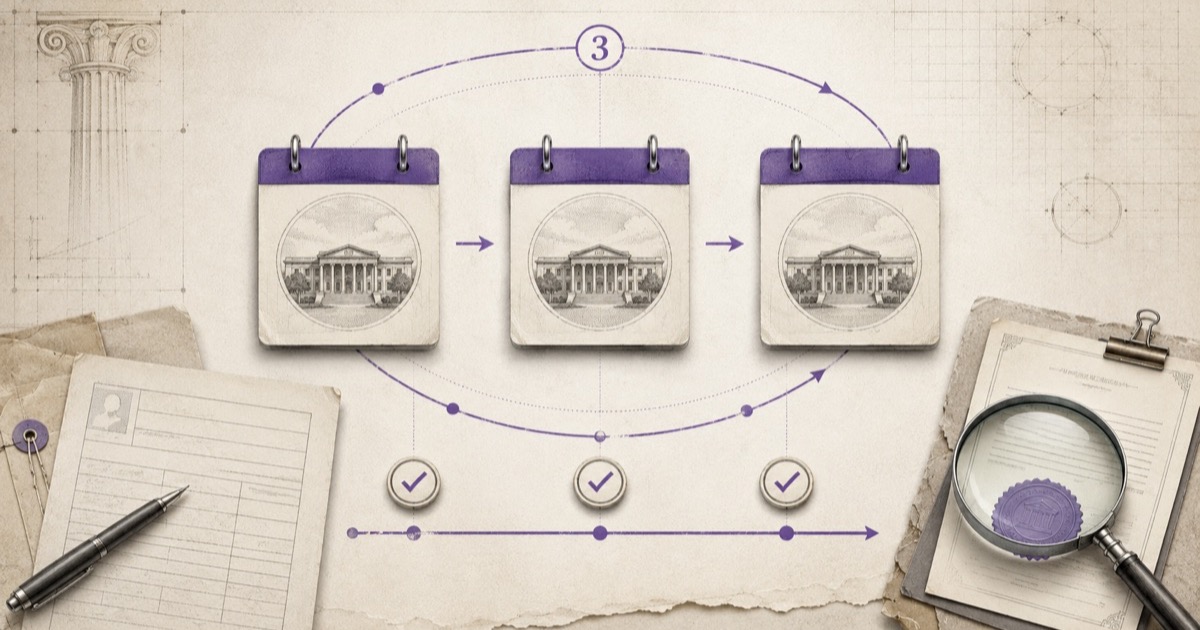 Exam Guide
FMGE Now 3 Times a Year: What Changed, Why, and What It Means for Your Attempts
NBEMS has moved FMGE from two sittings a year to three, with an additional exam on October 31, 2026 and the January 9 session pushed later. The backlog of 50,000+ pending FMGs is the reason, and it changes which session you should actually target.
31 August 20268 min read Exam Guide
FMGE High Yield Topics 2026: The Most Repeated PYQs Across All 20 Subjects
FMGE high yield topics 2026 for all 20 subjects: the most repeated PYQs from 10 years of previous year question analysis, tiered by how often they appear.
7 August 202614 min read
About the author
Your FMGE preparation starts today.
6,000+ PYQs. Subject-wise insights. Score against 150 after every session. Free to start.




Trusted by graduates from 13 countries